
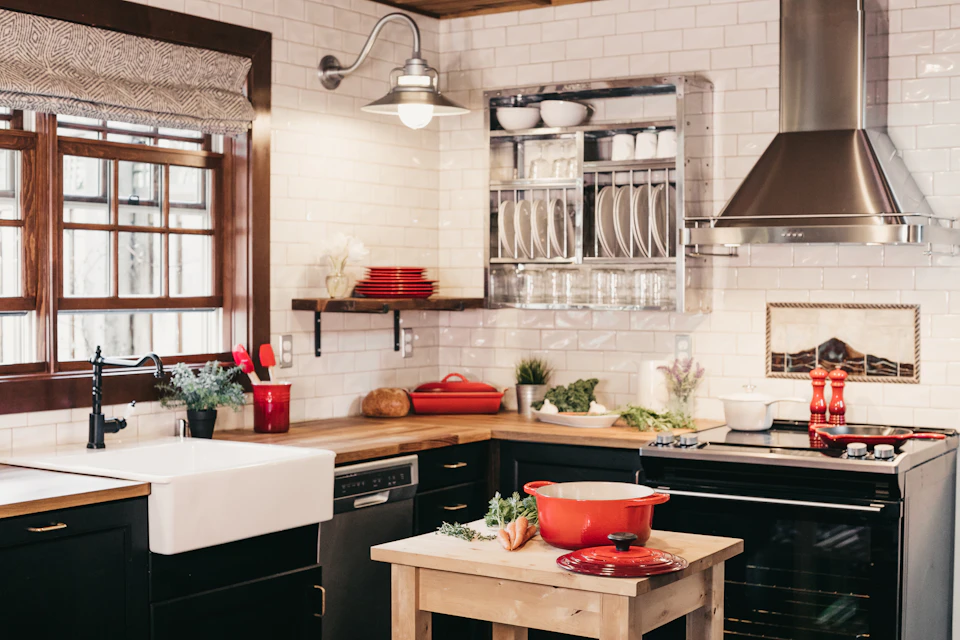
Planning ranges reviewed November 5, 2026. National kitchen tiers with the Texas labor band applied to the low and high ends, then rounded to the nearest $100 (nearest $10 under $100). Same medium-kitchen assumption as the national guide. Metro rows scale the national typical band. They are not stacked on the state band. Texas carpenter wage medians run well under the US figure; the project band stays nearer national because cabinets, counters, and appliances are priced nationally and labor is only part of the job.
| Tier | What's included | Cost range |
|---|---|---|
| Minor refresh | Paint, hardware, backsplash, faucet | $4,400 – $12,200 |
| Mid-range | Stock cabinets, counters, appliances; same layout | $12,300 – $35,700 |
| Major remodel | Semi-custom cabinets, layout tweaks, premium appliances | $30,800 – $76,500 |
| Luxury | Custom cabinetry, structural changes, high-end appliances | $66,000 – $153,000+ |
| Component | Share of budget | Typical cost |
|---|---|---|
| Cabinetry | 25–40% | $3,100 – $30,600 |
| Labor & installation | 20–35% | $2,500 – $26,500 |
| Appliances | 10–20% | $1,200 – $15,300 |
| Countertops | 8–15% | $990 – $11,500 |
| Flooring | 5–10% | $620 – $7,700 |
| Plumbing & electrical | 5–10% | $620 – $7,700 |
| Permits, design, misc | 3–8% | $370 – $6,100 |
| Kitchen size | Minor | Mid-range | Major |
|---|---|---|---|
| Small (< 100 sq ft) | $3,500 – $10,200 | $8,800 – $22,400 | $19,400 – $45,900 |
| Medium (100–200 sq ft) | $4,400 – $12,200 | $12,300 – $35,700 | $30,800 – $76,500 |
| Large (200+ sq ft) | $6,200 – $15,300 | $17,600 – $51,000 | $44,000 – $122,400 |
| Level | 10×10 cost |
|---|---|
| Budget | $7,000 – $15,300 |
| Mid-range | $13,200 – $30,600 |
| Premium | $26,400 – $56,100 |
| Metro | Factor vs. national | Typical project | What changes the quote |
|---|---|---|---|
| Houston | 0.92–1.05× | $12,900 – $47,300 | Large trade pool. A ducted, insulated hood is part of the base scope in Gulf humidity. Suburban slabs turn a moved sink into a saw-cut. |
| Dallas–Fort Worth | 0.95–1.08× | $13,300 – $48,600 | Older Dallas neighborhoods can price under Collin County. Expansive clay shows up as cabinet scribe and cracked tile, separate from the cabinet allowance. |
| Austin | 1.05–1.20× | $14,700 – $54,000 | Permit review and finish expectations sit above the state median. Central houses often hide a small electrical panel or galvanized supply. |
| San Antonio | 0.88–1.0× | $12,300 – $45,000 | Usually the most forgiving of the four on labor. Inner-loop houses may be pier-and-beam; north-side suburbs are slab. |
Mid-range benchmark used in the guide: $24,600.
Sources for these tables
- Angi, kitchen remodel cost (2026 project data)
- BLS OEWS, carpenters
- BLS OEWS, Texas (May 2025 reference period)
- BLS OEWS, plumbers, pipefitters, and steamfitters
- Texas State Board of Plumbing Examiners
- Texas Department of Licensing and Regulation
- Houston Permitting Center, residential remodel
- JLC / Zonda Cost vs. Value 2025
Ranges reviewed November 5, 2026. This page scales the national kitchen remodel cost guide by the Texas labor band. It is a planning range for comparing quotes.
A kitchen quote in Texas moves with three things a national average flattens: which metro the house is in, whether the sink and the range stay where they are, and whether the floor is a slab or a pier-and-beam crawl space. Cabinets are still the largest line. The tables under the photo are the 2026 bands. Most kitchens that keep the footprint land at $12,300 – $45,900.
The bathroom in the same house is a different project. Use bathroom remodel cost in Texas for the tub, the shower, and the vanity. This page is cabinets, counters, the hood, and the gas or electric range.
How these Texas numbers are built
Angi’s 2026 kitchen data, updated September 4, 2026 from 13,100 projects, puts the national average near $26,992. Most homeowners in that set paid between about $14,592 and $41,613. Our national typical band is $14,000 – $45,000, which covers that span and a little of the high side. The Angi average sits inside it, close to the national benchmark of $28,000. The state page scales our tier table. The Angi average mixes a hardware swap with a layout change, so it is the wrong single number to multiply by a Texas factor.
The state band is 0.88–1.02×. The low end of each national tier is multiplied by 0.88 and the high end by 1.02, then rounded to the nearest $100 (nearest $10 under $100). That is why $14,000 – $45,000 becomes $12,300 – $45,900. Materials ship at national prices. Labor is the piece that moves, and on a kitchen it is only part of the invoice.
The wage evidence is the May 2025 BLS Occupational Employment and Wage Statistics release for carpenters, the trade that sets cabinets. The median annual wage was $48,900 in Texas and $60,580 nationally — about 19% lower in Texas, or $23.51 an hour versus $29.12. State detail is in the Texas OEWS tables. Those figures are employee wages. An invoice adds insurance, a truck, shop time, overhead, and profit. Cabinets are 25–40% of a mid-range budget and labor is 20–35%. A 19% gap on the labor share is a mid-single-digit move in the project total. The cabinet boxes, the stone, and the appliances are priced on national catalogs. The project band stays at 0.88–1.02×, with the high side open for Austin. A flat 19% discount would pretend those materials got cheaper at the state line.
Plumbers are the cross-check, and the gap is smaller. The May 2025 median for plumbers, pipefitters, and steamfitters was $59,840 in Texas and $63,800 nationally — about 6% under the US figure, or $28.77 an hour versus about $30.67. That is the same wage pair the Texas bathroom guide uses, from the plumber OEWS table. A kitchen’s plumbing line is smaller than its cabinet line. Both gaps are reasons to keep Texas project totals near the national band. Metro rows on this page scale the national typical band ($14,000 – $45,000). They sit beside the state adjustment. They are not multiplied by it again.
The single benchmark printed under the tables, $24,600, is the national $28,000 medium-kitchen center taken at the low side of the Texas factor. Read it as a floor for a medium kitchen that keeps the footprint. When the house is in Austin, use the Austin metro row.
What the tiers mean on a Texas job
A minor refresh ($4,400 – $12,200) is paint or a sprayed finish on boxes that are still square, new hardware, a faucet, and a backsplash on the existing sink wall. A mid-range remodel ($12,300 – $35,700) is stock or light semi-custom cabinets, new counters, and a new appliance package on the same footprint. Major ($30,800 – $76,500) is where semi-custom boxes, a small layout tweak, and better appliances show up. Luxury ($66,000 – $153,000+) is custom cabinetry or a wall coming out.
Cabinets decide the tier. The national guide’s installed allowances are still the right way to read a Texas bid: stock boxes about $100–$300 per linear foot, semi-custom about $400–$700, and custom about $800–$1,500 and up. Outside Austin, install labor pulls quotes toward the low and middle of each band. Austin quotes often sit at the top of the same band. A normal L is about 22 linear feet. At $250 a foot installed that is $5,500. At $550 it is $12,100. The photos can look alike from the doorway. The bid will not. After the Texas band, the whole-project cabinet line in the component table is $3,100 – $30,600. When a bid’s cabinet number sits far outside that line, ask whether it is boxes only or boxes plus delivery, install, filler strips, end panels, and the island.
The 10×10 table above is the footprint contractors mean by “a standard kitchen”: 100 sq ft, L-shaped. At 180 sq ft, scale from that table and add 10–15% for extra corners and longer runs, then price the island as its own cabinet, counter, and electrical lines. The size table does the same job for a small galley, a medium kitchen, and a large one. A galley under 100 sq ft still leaves the minor tier once the boxes are semi-custom.
Labor on the scaled component split is $2,500 – $26,500. Counters are $990 – $11,500. Appliances are $1,200 – $15,300. Quartz is the counter most Texas suburb bids specify. The line-item guide is quartz countertop cost. The fabricator templates after the boxes are set and level. A template taken before the cabinets are in is how a seam lands across the sink.
Houston, Dallas, Austin, and San Antonio
The metro table is a set of planning factors, not a BLS wage index for each city. Sort quotes with it, then make the contractor price the house in front of you.
Houston ($12,900 – $47,300, factor 0.92–1.05×) has a deep trade pool and a large local semi-custom shop market. Houses inside the loop are often older and pier-and-beam. Katy, Cypress, Sugar Land, and The Woodlands are slab. Those master-planned communities usually leave an interior kitchen alone and still review a new hood penetration or a window change on a street-facing wall. Ask the HOA before the sheet-metal contractor cuts the elevation.
Humidity is the scope item people leave off the bid. A recirculating hood keeps cooking moisture in the room. On the Gulf Coast that moisture loads the air conditioner and collects in the sink base. Specify a hood that ducts outdoors, and insulate the duct where it crosses the attic. A bare metal duct in a Houston summer attic sweats onto the new ceiling the first time someone boils a pot. Houston also has no conventional zoning. That civic fact leaves the building code in place. The Houston Permitting Center still reviews a residential remodel that moves structure. Confirm the address is inside the city before you assume those rules. A large share of “Houston” kitchens are in unincorporated Harris County or a municipal utility district, and the desk is a different one. Licenses and the finish-work split are below.
Dallas–Fort Worth ($13,300 – $48,600, factor 0.95–1.08×) covers more than one price. Older neighborhoods in Dallas proper often price under Collin County and the other northern suburbs, where the cabinet spec and the general contractor’s calendar both run hotter. Read Frisco, Plano, and McKinney against the high side of this metro row. Expansive clay is the local driver a national calculator skips. Much of the Metroplex sits on soils that swell when they are wet and shrink when they dry. A tile floor that cracks on a diagonal, or doors that drift out of alignment the summer after install, is often the foundation. Foundation repair is its own contract. Ask the tile setter where the movement joints go, and keep a stone counter off a joint the slab is already showing. City of Dallas building inspection is the starting point inside the city limits. Each suburban city runs its own counter.
Austin ($14,700 – $54,000, factor 1.05–1.20×) is the metro that most often clears the national typical band. Permit review takes longer than in San Antonio. Central houses — Hyde Park, East Austin, older Clarksville — regularly hide a 100-amp panel, galvanized supply, or a cast-iron stack. A “new faucet and a range” becomes a repipe and a panel change once someone opens the wall. Budget the major tier until the electrician has looked at the panel. An induction range wants a 40- or 50-amp circuit. A gas range leaves that load alone and, if the range moves, needs a licensed plumber on the fuel line. The City of Austin permitting office is the reference for whether the scope needs a trade permit. Paint, hardware, and a faucet in the same hole are a different conversation from a sink that changes walls.
San Antonio ($12,300 – $45,000, factor 0.88–1.0×) is usually the most forgiving of the four on labor. Inner-loop houses in King William, Monte Vista, and Beacon Hill are often pier-and-beam, which changes the cost of moving a sink. A historic overlay can still care about a hood cap or a window on the street even when the interior is yours to redo. North-side subdivisions such as Stone Oak look more like Dallas slabs. The City of San Antonio Development Services counter is where you confirm the address is actually in the city.
Slab versus pier-and-beam
This is the cost driver national per-square-foot tools miss. The foundation split matches a Texas bath. The pipes do not.
| Foundation | Where you see it | If the sink and range stay | If the sink, island, or gas line moves |
|---|---|---|---|
| Pier-and-beam | Older Houston, parts of inner Dallas and San Antonio | Same as a national fixture swap | A plumber can often work from the crawl space |
| Slab-on-grade | Most suburban houses built after the 1970s | Same as a national fixture swap | Saw-cut, patch, and often a larger floor repair |
Keeping the layout is still the highest-leverage decision on the bid. The national guide’s allowance for moving a sink or a range is $2,000–$8,000. On a slab, concrete cutting and patching is a separate line. Ask for it that way. On a pier-and-beam house, crawl-space access can keep the extra line smaller when the crawl space is tall enough to work in and the waste line has slope. A tight crawl with a long horizontal run out to an island can erase that advantage.
An island with power is the version people underprice. The cabinet box and the counter are the parts you can see. The floor box and the circuit are the parts that hit the saw. On a slab the electrician is in the cut with the plumber. On pier-and-beam the wire can often come up from below. A dishwasher in a kitchen that never had one needs a drain, hot water, and a dedicated 120-volt circuit. On a slab, the drain is the expensive piece of that trio.
When the floor stays and the backsplash is the visual change, tile installation cost is the line-item guide. The tile calculator sizes the order with a waste factor before the boxes of tile show up.
Hoods, attic heat, and the air conditioner
Texas kitchens miss their budget in the ceiling as often as they miss it in the cabinet showroom.
A ducted hood is the right spec in Houston and along the Gulf. It is also the right spec in Dallas and Austin once the range is a real cooktop and the old microwave-over-range only recirculated. The duct terminates outdoors. Where it crosses the attic, it gets insulated. Cooking vapor in bare metal meets attic heat and condenses. The stain lands on the ceiling, and the new cabinet crown is what people blame.
Recessed lights are the other hole in that ceiling. A can that is open to the attic is a path for conditioned air to leave and for attic heat to come in. On a permitted Houston remodel, the residential remodel listing points plan review at the 2015 International Energy Conservation Code, or a REScheck or IC3 report. Price new ceiling lights as an air-sealing line. If opening the ceiling disturbs the attic ducts, reseal them before the drywall goes back. The July electric bill is how people discover the crew skipped that. When the outdoor unit is already near the end of its life, price the replacement on its own — see HVAC replacement cost. The kitchen allowance does not include a condenser.
The calendar follows the weather. January through March is when many Texas crews have room. July and August are when the ceiling is open, the air conditioner is losing, and the cabinet installers people actually want are booked. Collect the winter quotes and compare them line by line.
Permits, licenses, and what to ask before you hire
California licenses the general contractor. Texas puts the state license on the plumber and the electrician, and lets cities handle the permit. This is a planning note, not legal advice. Confirm the rule for the address before you open a wall.
Plumbers are licensed by the Texas State Board of Plumbing Examiners. The responsible master plumber’s number belongs on the advertisement and on the invoice. Master numbers start with M. Fuel-gas piping for a range is plumbing work. Look the license up, and confirm a certificate of insurance is on file, before demo day. Electricians are licensed by the Texas Department of Licensing and Regulation. A city can require that licensee to register locally before the permit is sold.
Permit fees are the small line. On the national component table, permits sit with design and miscellaneous costs at $420 – $6,000. The Texas table scales that combined line to $370 – $6,100. The inspection is what slips the schedule. A failed rough-in on the drain or the hood duct holds the cabinet delivery, and a kitchen with no sink keeps the general contractor’s weekly cost running. The City of Houston’s published cooking-top electrical permit is a useful scale check: a minimum of $91.06, plus an admin fee of $33.56, with plan review added when the scope needs drawings. Fees change. The order of magnitude is the point. Build a one-week cushion into any quote that moves a sink or a gas range.
Houston’s one-stop residential sheet (February 2026) says the city does not license or register general contractors. A trade permit is purchased by the licensed electrician, plumber, or mechanical contractor, who registers that state license with the city. The city’s rebuild guidance draws the line homeowners blur: painting, cabinets, countertops, tile, and similar finish work do not need a structural permit; plumbing other than replacing faucets, water-control valves, disposals, or toilets does, and that includes sinks; electrical work needs a permit and a licensed electrical contractor registered with the city. A same-location faucet and a disposal can be a homeowner task. Moving the sink is a plumber and a permit. Bellaire, West University Place, and unincorporated Harris County are not that counter. Call the desk that matches the address.
Dallas, Austin, and San Antonio run the same idea through their own codes. Cabinet refacing on the existing footprint is the job that often stays off a structural permit. New circuits, a relocated drain, a gas line, and a wall coming out are the jobs that do not stay off it. Austin’s older houses are where the panel surprise lives. Price a panel change as its own line, outside the appliance allowance.
Opening a wet wall in the Houston area sometimes turns up Formosan termite damage in a sill or the bottom plate behind the sink base. Write a unit price for sistering or replacing that wood before the new boxes are scribed. It is outside the cabinet allowance, and it is cheaper to find while the wall is open.
What changes the quote inside the same city
Hold the metro factor still. These items still move a Texas bid:
- Layout. A refresh at $4,400 – $12,200 and a sink move at $30,800 – $76,500 can be the same square footage.
- Cabinet construction. Stock boxes with a sprayed finish sit in the overlap between minor and mid-range. Semi-custom with soft-close and a furniture toe-kick climbs while the sink stays put. Refacing boxes that are still square is often $3,000–$8,000 for a professional spray finish, against a full replacement. If you spray the doors yourself, the tool path is best paint sprayer for cabinets.
- Stone and edge. After the Texas band, counters are $990 – $11,500. A waterfall edge, a seam in the walking path, or an extra sink cutout moves that line without adding a cabinet.
- Appliances and the panel. A slide-in range on the existing circuit stays inside $1,200 – $15,300. Induction, a panel-ready refrigerator, and a panel upgrade do not.
- Access and season. A second-floor kitchen in a pier-and-beam bungalow costs more to protect and to haul debris from than a first-floor slab house with a door to the driveway. August adds heat and a booked schedule on top of the access.
- Who buys the boxes and the appliances. General contractor markup on materials is often 15–25%. Buying the appliances yourself at a holiday sale removes that markup and adds the risk that the range opening and the cabinet panel disagree on install day. Cabinet lead times of 4–12 weeks dominate the schedule either way. Order the boxes before demo starts.
Walls and the ceiling, once the boxes are in, are a paint quantity. The paint calculator covers gallons for a room full of cabinet cutouts.
DIY versus hiring it out
The cosmetic work is the part worth doing yourself: empty the room, paint or spray doors that come off the boxes, swap a faucet in the same holes, set a backsplash on a sound wall, install pulls. Fuel gas, a drain that moves, a new circuit, and the stone template belong to licensed trades. A leak under a slab sink is a second remodel. A gas connection a homeowner finishes on a Sunday is a different kind of failure.
A practical split on a mid-range Texas kitchen: you demo the dry zones and haul the old boxes, the plumber and the electrician do the rough-in, everyone waits for inspection, and the cabinet installer sets the boxes before the fabricator templates. That split saves demolition labor. The cabinet warranty and the counter warranty stay with the people who set them.
Resale, on the package you actually bought
The 2025 JLC / Zonda Cost vs. Value report prices three defined kitchen packages at national averages. A minor midrange kitchen at about $28,458 recouped about 113%, roughly $32,141 of resale value. A major midrange kitchen at about $82,793 recouped about 51%. A major upscale kitchen at about $164,104 recouped about 36%. Those are fixed scopes, estimated across many US markets. They are a planning reference for a matching scope.
Use the 113% figure on a job that matches that minor package. On this page, a defined job near $28,000 sits inside the mid-range tier ($12,300 – $35,700), above a paint-and-hardware refresh at $4,400 – $12,200. The major package, at about $82,793, sits above this page’s major tier ($30,800 – $76,500) and inside luxury ($66,000 – $153,000+). The useful claim is narrower than a statewide ROI: buyers pay for a kitchen that looks current, a same-layout cabinet and counter replacement is the scope with a published full recoup, and a layout-change luxury gut ($66,000 – $153,000+) is where extra spend stops coming back at resale.
Selling within two years argues for keeping the footprint, replacing the tired surfaces, and fixing anything that smells like a leak under the sink. Staying ten years is when an Austin or Dallas kitchen can justify the major tier, because you cook in it. The report does not price that use. California’s labor band is a separate article, kitchen remodel cost in California. Arizona stays nearer this Texas project total and then adds desert heat, in kitchen remodel cost in Arizona.
How to compare three Texas quotes
Ask each bidder to price the same scope in writing:
- Cabinet line with linear feet, the box level (stock, semi-custom, or custom), and whether install, fillers, and panels are included
- Counter material, edge profile, and who templates
- Appliance list with model numbers, or a dollar allowance you control
- Hood airflow and where the duct terminates, plus whether the attic run is insulated
- Slab cut or crawl-space work as its own line if a drain, a gas line, or an island circuit moves
- Who pulls the permit, the TSBPE number for the plumber, and the TDLR number for the electrician
- How many days the water and the cooktop are out
- A unit price for a rotten stud, a failed shutoff, or a termite-damaged sill
- Whether a panel change is inside the number
Set aside a bid that is one round number and no lines. A spread of more than about $8,000 on an identical mid-range scope usually means one bidder left out the hood duct, the slab patch, the haul-off, or cabinet installation. The component table is the checklist for what a thin bid skipped.
Related guides
- Kitchen Remodel Cost — national tiers this page scales, including the 10×10 benchmark
- Kitchen Remodel Cost in California — a higher labor band, permits, and Title 24 lighting
- Kitchen Remodel Cost in Arizona — Phoenix, Tucson, and Scottsdale, plus summer heat
- Bathroom Remodel Cost in Texas — the same slab, license, and metro logic for the bath
- Quartz Countertop Cost — the counter line, templated after the boxes are set
- Tile Installation Cost — backsplash and floor
- Tile Calculator — box count with waste
- Paint Calculator — walls and ceiling after the cabinets are in
- Best Paint Sprayer for Cabinets — refinish doors instead of replacing the boxes
- HVAC Replacement Cost — when the kitchen opening shows a failing air conditioner
FAQ
How much does a kitchen remodel cost in Texas in 2026?
Most kitchens that keep the footprint cost $12,300 – $45,900. A cosmetic refresh is $4,400 – $12,200. Semi-custom cabinets with a layout tweak are $30,800 – $76,500. Custom cabinetry or a wall coming out starts in $66,000 – $153,000+. Houston, Dallas–Fort Worth, Austin, and San Antonio each have a row in the metro table.
Is a kitchen cheaper in Houston than in Austin?
On the planning factors, Houston’s typical band is $12,900 – $47,300 and Austin’s is $14,700 – $54,000. The same cabinets and the same quartz can still cross if the Austin house keeps the sink and the Houston house is a slab cut for an island. Compare the line items.
Do I need a permit for a kitchen remodel in Texas?
Paint, refacing, and cabinets or counters that stay on the existing footprint often stay off a structural permit. A moved sink, a gas line, a new circuit, or a wall coming out usually needs one. Houston’s permitting center treats finish work differently from plumbing and electrical, and the city does not license general contractors. Plumbers are licensed by TSBPE and electricians by TDLR. Confirm the address. Unincorporated Harris County, a municipal utility district, and a suburban city use different desks from the City of Houston, the City of Dallas, Austin, and San Antonio.
How much more does it cost to move a sink on a slab?
Start with the national allowance of $2,000–$8,000 for moving a sink or a range, then add a separate concrete cutting and patch line. Pier-and-beam houses can skip the saw when the crawl space is workable. Either way, the project often leaves the mid-range tier ($12,300 – $35,700) and lands in major ($30,800 – $76,500).
Will a Texas kitchen remodel pay for itself at resale?
The 2025 Cost vs. Value minor midrange kitchen recouped about 113% of a roughly $28,458 national job. The major midrange package recouped about 51% of about $82,793. Match the package before you borrow the percentage. A dated kitchen that is blocking a sale is worth a same-layout refresh. A luxury gut ($66,000 – $153,000+) is a project you do because you want the room.
What should I do with a quote far below $12,300?
Read the scope. A number under the bottom of the mid-range tier can be an honest refresh ($4,400 – $12,200) or a bid that left out cabinet install, the hood duct, or haul-off. Ask which appliances are allowances and whether the stone template is included before you treat the low number as the bargain.